
Dambulla Blog Post
Meta Description:
Discover Dambulla in Sri Lanka – home to ancient cave temples, massive rock fortresses, and hot air balloon adventures. Learn what makes this Cultural Triangle destination special and why expert guidance enhances your visit.
Introduction
Dambulla sits at the crossroads of Sri Lanka’s ancient history and natural beauty. This central region holds some of the island’s most significant historical sites, where kings once ruled and Buddhist monks created remarkable cave temples carved into massive rock outcrops. But Dambulla offers more than ancient stones and religious art – the landscape itself commands attention with dramatic rock formations rising from flat plains and rural countryside that spreads in all directions.
The area has maintained its importance for over two millennia. What began as a refuge for an exiled king became a sacred site that generations of rulers expanded and embellished. Today, Dambulla serves as a gateway to Sri Lanka’s Cultural Triangle, that concentration of ancient cities and monuments that draws history enthusiasts from around the world. Yet despite its significance, Dambulla retains a surprisingly local character, with markets, temples, and daily life continuing around the monuments that made it famous.
Where is Dambulla
Dambulla occupies a central position in Sri Lanka’s interior, roughly 148 kilometers northeast of Colombo and 72 kilometers north of Kandy. The town sits at the junction of major roads connecting the ancient cities of Anuradhapura, Polonnaruwa, and Sigiriya, making it a natural stopping point for travelers exploring the Cultural Triangle. This strategic location partly explains why Dambulla developed historical importance – it stood at the crossroads of ancient trade and pilgrimage routes.
The geography around Dambulla features relatively flat agricultural land punctuated by dramatic rock outcrops. These massive stone formations rise abruptly from the surrounding plains, their presence made more striking by the contrast with the level ground around them. The famous cave temple complex occupies one such rock outcrop that dominates the town, visible from considerable distances across the countryside.
Dambulla falls within the dry zone of Sri Lanka, where the climate and vegetation differ noticeably from the wet southwestern regions. The landscape takes on a more arid character, with scrub forests, agricultural fields dependent on irrigation, and reservoirs that ancient rulers constructed to manage water resources in this relatively dry environment.
What Makes Dambulla Special
The Dambulla Cave Temple stands as Sri Lanka’s largest and best-preserved cave temple complex. Five separate caves house over 150 Buddha statues and cover the walls and ceilings with religious murals that span centuries of artistic development. What makes these caves extraordinary is both their scale and their continuous use – Buddhist monks have maintained religious practices here for over 2,000 years, making it one of the longest-used religious sites in South Asia.
The creation story adds drama to the site’s significance. King Valagamba fled to these caves when South Indian invaders seized his throne in the 1st century BCE. He lived in exile within these rock shelters for 14 years before regaining his kingdom. In gratitude, he transformed the caves into a magnificent temple complex, beginning a tradition of royal patronage that continued for centuries. Successive kings added statues, paintings, and architectural elements, each generation leaving its mark on the sacred space.
Beyond the famous caves, Dambulla serves as an ideal base for exploring nearby attractions. Sigiriya Rock Fortress lies just 19 kilometers away, and the ancient city of Polonnaruwa sits within easy reach. The proximity of these major sites makes Dambulla convenient for travelers wanting to experience multiple historical locations without constant hotel changes.
The town itself maintains authentic Sri Lankan character despite tourist traffic to the caves. The Dambulla wholesale vegetable market, one of the largest in Sri Lanka, operates daily with farmers bringing produce from surrounding regions. This massive market creates a buzz of commercial activity that has nothing to do with tourism – it’s genuine economic activity serving local needs. The contrast between the ancient sacred caves and the bustling modern market captures something essential about Sri Lanka, where historical reverence and practical daily life coexist comfortably.
The unique landscape surrounding Dambulla provides spectacular aerial perspectives. The flat agricultural plains dotted with rock outcrops, ancient reservoirs reflecting the sky, and patchwork of green fields create patterns visible only from above. This geography has made Dambulla one of Sri Lanka’s premier locations for hot air balloon flights, offering views that reveal how ancient civilizations shaped this landscape through irrigation systems and agricultural development.
Best Time to Visit Dambulla
Dambulla’s dry zone climate creates distinct seasonal patterns that affect the visiting experience. The dry season from May through September offers the most reliable weather, with minimal rainfall and clear skies. However, this period also brings intense heat, with daytime temperatures often exceeding 30°C. The dry conditions mean excellent visibility and consistent weather for outdoor activities, but the heat requires planning visits to exposed sites like the cave temple for early morning or late afternoon.
December through March marks the cooler dry period, generally considered the most comfortable time for visiting. Temperatures moderate slightly, though it remains warm by temperate climate standards. This period coincides with peak tourist season across Sri Lanka, meaning more visitors at major sites but also better availability of services and activities. The clear, dry weather during these months provides ideal conditions for aerial activities and photography.
October and November bring the northeast monsoon to the region, though Dambulla receives less rainfall than coastal areas during this period. The showers that do occur typically come as brief afternoon downpours rather than sustained rain. The landscape responds to the moisture, turning greener and more lush. This transition period often offers a sweet spot of fewer tourists, lower prices, and reasonably good weather, especially in October before the main monsoon arrives.
April represents the hottest month in Dambulla, when temperatures can become quite oppressive, particularly in the middle of the day. However, this coincides with the Sinhala and Tamil New Year celebrations in mid-April, when cultural festivities add interest to a visit despite the heat. Many Sri Lankans travel during this holiday period, giving the area a festive local atmosphere rather than an international tourist feel.
For hot air balloon flights, the best conditions typically occur from November through April when winds remain calm and predictable. Morning flights launch just after sunrise, taking advantage of stable air conditions before thermal activity increases with the warming day. The dry weather during these months ensures more consistent flight schedules with fewer cancellations due to unsuitable conditions.
Things to See in Dambulla
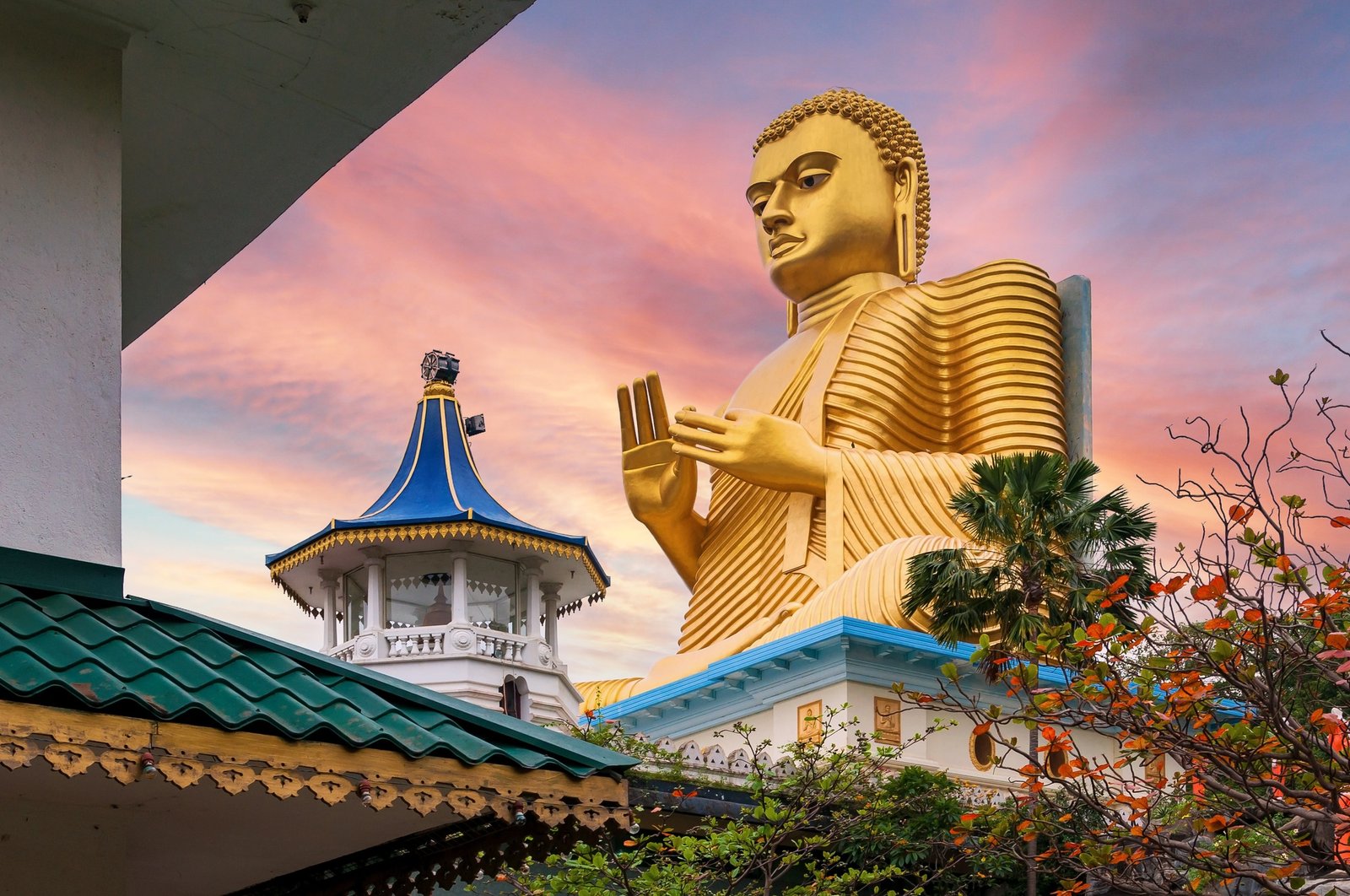
The Golden Temple complex at the base of the cave temple rock makes an impressive if somewhat controversial addition to the site. A giant golden Buddha statue, 30 meters tall, sits atop a museum building designed to resemble a dagoba. While modern and not to everyone’s aesthetic taste, the golden Buddha has become an unmistakable landmark visible from across the region. The museum within contains religious artifacts and provides context for the cave temples above.
The five caves themselves each possess distinct characters and contents. The first cave, the Temple of the King of Gods, contains a 14-meter-long reclining Buddha carved from the living rock. The second cave, the Great Kings’ Temple, represents the most impressive, with 56 statues and vibrant ceiling paintings covering 2,100 square meters. Later caves added by various kings show different artistic styles and periods, creating a chronological display of Buddhist art development.
Rock formations throughout the area provide geological interest beyond their role as temple foundations. These outcrops represent some of the oldest exposed rock in Sri Lanka, formed over 500 million years ago. Their weathered surfaces, rounded forms, and the way they emerge from flat surroundings create landscapes that ancient peoples recognized as sacred long before Buddhism arrived in Sri Lanka.
Ancient reservoirs dot the countryside around Dambulla, remnants of sophisticated irrigation systems that sustained civilizations in this dry zone for millennia. These tanks, as they’re called locally, still function today, supplying water for agriculture and creating wetland habitats for birds and other wildlife. The largest reservoirs stretch for kilometers, their bunds forming elevated pathways across the landscape.
Small rural villages surround Dambulla, where agricultural life continues much as it has for generations. Paddy fields form geometric patterns across the land, changing color with the growing season from the bright green of new rice to the golden yellow of mature crops ready for harvest. Vegetable cultivation, particularly in the areas supplying the wholesale market, creates additional patterns of different crops and field divisions.
Things to Experience in Dambulla
Hot air balloon flights over the Cultural Triangle offer perspectives impossible to gain from ground level. Floating silently above the landscape as dawn light illuminates the countryside reveals the full scope of ancient engineering – the networks of reservoirs and irrigation channels, the relationship between rock outcrops and settlement locations, the way Sigiriya Rock rises in isolation from the surrounding plain. The stillness of balloon flight, moving with the wind rather than against it, creates a meditative quality that suits contemplation of these ancient landscapes.
The cave temple experience extends beyond simply viewing statues and paintings. The caves remain active religious sites where monks conduct daily rituals and local devotees come to pray and make offerings. The scent of incense, the sound of chanted prayers, and the sight of fresh flower offerings create sensory experiences that connect visitors to centuries of continuous worship. The climb to the caves, though not particularly long, builds anticipation and provides changing views of the surrounding countryside.
The vegetable market operates as a window into Sri Lankan agricultural commerce. Trucks arrive throughout the day loaded with produce from farms across the region. Buyers and sellers negotiate prices, porters move goods in organized chaos, and the variety of tropical vegetables creates colorful displays. The market follows its own rhythms and logic, fascinating to observe even if you’re not there to buy produce.
The surrounding countryside rewards exploration, where rural roads pass through villages, fields, and patches of scrub forest. The pace of life slows away from the main sites, where bullock carts still transport goods, where farmers work fields using methods refined over centuries, and where the connection between people and land remains direct and visible. Small temples and shrines appear along roadsides, showing the integration of Buddhism into daily life rather than its separation into tourist attractions.
Why Visit Dambulla with a Local Guide
The cave temple paintings and statues carry layers of meaning that aren’t obvious without explanation. Different hand gestures of Buddha statues convey specific teachings, painting compositions tell particular stories from Buddhist scriptures, and artistic styles reflect the periods when different sections were created or renovated. A knowledgeable guide can decode these visual elements, transforming a visit from seeing impressive art to understanding the religious and historical narratives the art conveys.
Timing visits to avoid crowds at the cave temple requires local insight. Tour buses follow predictable schedules, creating peak periods when the caves become congested and the contemplative atmosphere diminishes. Guides familiar with daily patterns know when to visit for the most peaceful experience, allowing time to appreciate the art and atmosphere without competing for viewing positions or rushing through because of crowds pressing from behind.
The relationship between Dambulla and other Cultural Triangle sites benefits from expert explanation. These ancient cities didn’t exist in isolation – they were capitals of kingdoms that rose and fell, fought wars, formed alliances, and traded across the Indian Ocean. Understanding these connections helps make sense of the architectural similarities, the movement of artistic styles, and why certain locations gained importance while others declined. This historical context transforms scattered site visits into a coherent narrative of civilization development.
Hot air balloon operations require coordination that guides handle seamlessly. Launch sites change based on wind conditions, timing depends on weather forecasts, and the logistics of early morning departures and post-flight transportation need management. Experienced guides work with balloon operators to ensure smooth experiences while explaining what you’re seeing during the flight – identifying landmarks, explaining landscape features, and pointing out details easily missed when viewing from unfamiliar perspectives.
Photography opportunities abound in Dambulla, but capturing them well requires knowing where to position, when light conditions work best, and which viewpoints offer the most compelling compositions. Guides familiar with the sites can suggest angles that showcase architectural details, lighting times that bring out colors in cave paintings, and landscape viewpoints that capture the relationship between human-made structures and natural formations. This knowledge helps visitors return home with images that truly represent what makes Dambulla special rather than standard tourist snapshots.