
Introduction
Bundala National Park stretches along Sri Lanka’s southeastern coast, where wetlands, scrubland, and coastal dunes create habitats for an exceptional variety of wildlife. While Yala National Park draws the majority of safari visitors to this region, Bundala offers something different – a quieter, less crowded experience focused particularly on birdlife and coastal ecosystems. The park gained international recognition as a UNESCO Biosphere Reserve and a Ramsar Wetland of International Importance, acknowledgments of its ecological significance that extend far beyond Sri Lanka’s borders.
What distinguishes Bundala is its position as a critical stopover for migratory birds traveling between Siberia and Australia. Thousands of waterbirds descend on the park’s lagoons and wetlands during migration seasons, creating spectacular concentrations of species rarely seen elsewhere in Sri Lanka. But the park offers more than seasonal bird visitors – resident wildlife, including elephants, crocodiles, and several mongoose species, inhabit various park zones throughout the year, making Bundala rewarding regardless of when you visit.
Where is Bundala National Park
Bundala National Park lies in the Hambantota District of southern Sri Lanka, approximately 245 kilometers southeast of Colombo. The park sits along the coast between the towns of Kirinda and Hambantota, covering 6,216 hectares of coastal terrain. Its location places it about 20 kilometers east of Tissamaharama, a town that serves as a common base for visitors exploring both Bundala and nearby Yala National Park.
The park encompasses five shallow lagoons – Bundala, Embilikala, Koholankala, Malala, and Mahalewaya – that form the heart of the wetland system. These brackish lagoons connect to the ocean through narrow channels, creating environments where freshwater and saltwater mix. The coastal position means the park includes beach areas and sand dunes in addition to the wetlands and scrub forest that dominate the interior.
Bundala falls within Sri Lanka’s dry zone, where rainfall concentrates in the northeast monsoon period and long dry seasons create arid conditions for much of the year. This climate produces the thorny scrub vegetation and drought-adapted plants characteristic of the region. The seasonal water availability in the lagoons fluctuates significantly, affecting wildlife distribution and behavior throughout the year.
What Makes Bundala National Park Special
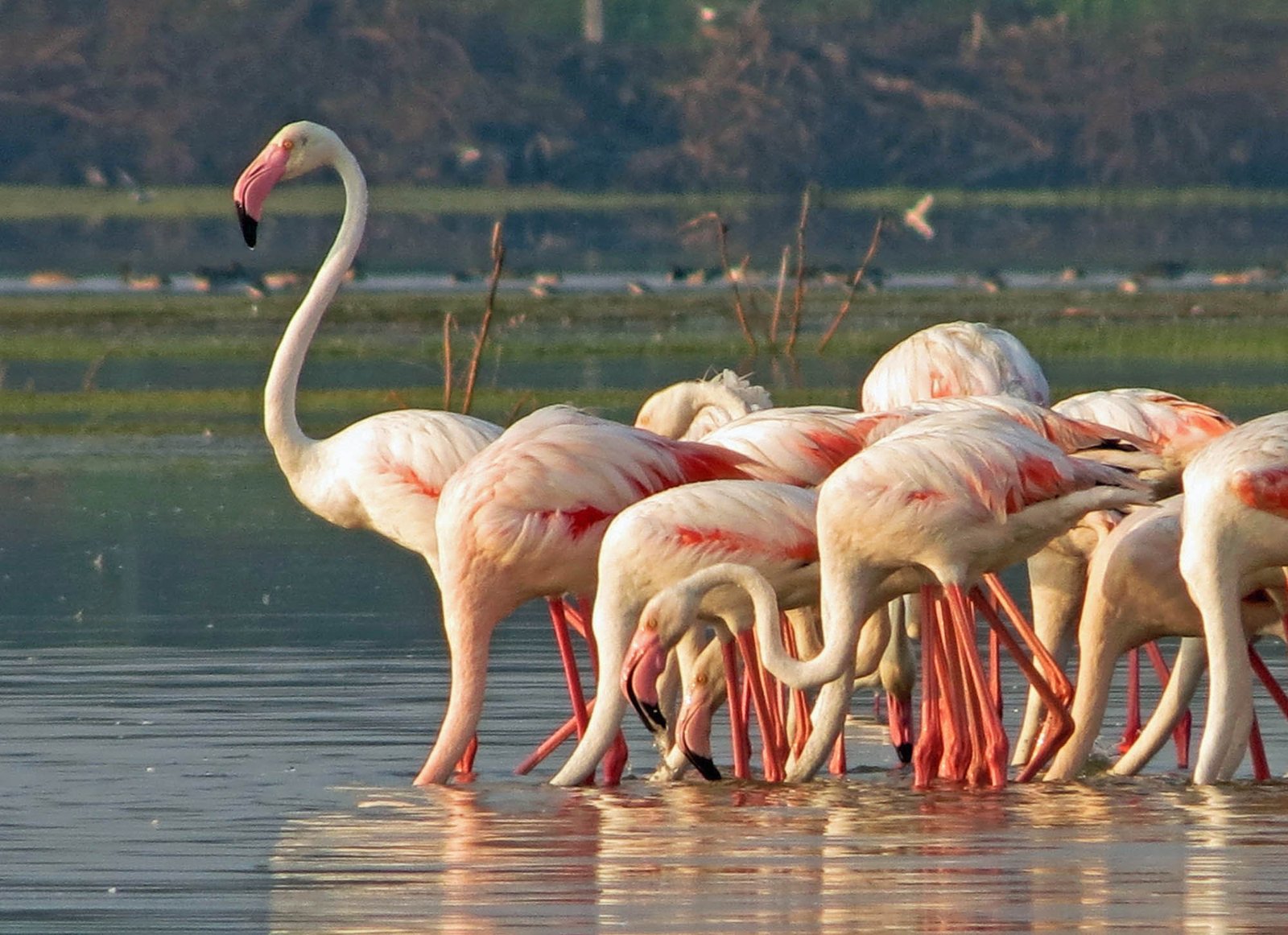
The bird diversity at Bundala reaches extraordinary levels, with over 197 species recorded within the relatively compact park area. This includes 58 migratory species that use the wetlands as crucial rest stops during their long-distance journeys. The park’s importance for greater flamingos particularly stands out – flocks of several thousand birds arrive during peak migration periods, creating pink masses across the lagoons. Bundala represents one of only a handful of regular flamingo sites in Sri Lanka, making these sightings special for both casual observers and serious birders.
The wetland system provides breeding grounds for numerous resident water birds. Painted storks, spoonbills, pelicans, and various heron and egret species nest in colonies within the park. These breeding colonies, some containing hundreds of nests, create remarkable concentrations of bird activity during nesting seasons. The sight and sound of these colonies – the constant movement, the calls of adults and chicks, the comings and goings of birds bringing food – offers wildlife spectacle that few other Sri Lankan locations can match.
Elephant populations move through Bundala regularly, though in smaller numbers than in Yala. The park’s elephants belong to herds that range across a wider area, using Bundala as part of their territory rather than residing permanently. Their presence adds an element of unpredictability and excitement to park visits, as you never know when you might encounter these impressive animals moving through the scrub or drinking at lagoon edges.
Reptile diversity reflects the park’s varied habitats. Mugger crocodiles inhabit the lagoons and can often be seen basking on banks or floating with just eyes and nostrils visible above the water surface. Several monitor lizard species patrol different park zones, from water monitors in wetland areas to land monitors in drier sections. Snake diversity includes both venomous and non-venomous species adapted to the different microhabitats within park boundaries.
The coastal location creates unique ecosystem dynamics. Sea turtles nest on park beaches during appropriate seasons, and marine fish species enter the lagoons with tidal flows. The interaction between land and sea environments produces biodiversity patterns different from purely inland parks. Salt-tolerant plants grow near the coast, gradually transitioning to different vegetation types as you move inland away from ocean influence.
Best Time to Visit Bundala National Park
September through March represents peak season for bird watching at Bundala when migratory species arrive from northern breeding grounds. The massive flamingo flocks typically appear from September through April, though specific timing varies between years depending on conditions along their migration routes. December through February offers the most reliable period for seeing the greatest variety of migratory species, as birds that arrived in autumn remain while later migrants continue arriving.
The dry season from May through September brings lower water levels in the lagoons, concentrating waterbirds in remaining wet areas. While this means fewer total birds than during migration peaks, the concentration can make observation and photography easier. The dry conditions also improve vehicle access to different park areas and reduce mud that can make some tracks difficult during wet periods.
October and November mark the northeast monsoon transition when rain begins returning to the region. The early rains start filling lagoons and wetlands, attracting birds even before the main migratory influx. This period can offer excellent wildlife viewing with the added benefit of lower tourist numbers than the peak December-March season. The landscape begins transforming from dry browns to greens as vegetation responds to moisture.
April stands out as the hottest month when midday temperatures can become quite intense. However, this heat concentrates wildlife around water sources where they come to drink and cool off. Early morning safaris during April avoid the worst heat while taking advantage of active wildlife periods. The harsh conditions actually make animal behavior more predictable as they must visit water regularly.
Morning visits from 6:30 AM until about 10 AM provide the best wildlife activity and photography light. Animals feed more actively during cooler morning hours, and bird activity peaks as they hunt, preen, and interact. The angled morning sun creates better lighting conditions for photography than harsh midday overhead light. Afternoon safaris from 3 PM until park closing at 6 PM offer similar advantages as temperatures cool and wildlife becomes active again after midday rest periods.
Things to See in Bundala National Park
The five lagoons each possess distinct characteristics that attract different bird species. Bundala Lagoon, the largest, often holds the biggest flamingo concentrations when these birds visit the park. Koholankala and Malala lagoons provide excellent viewing for waders and waterfowl, with sandbanks and mudflats exposed at certain water levels creating ideal feeding grounds. The lagoons shift in appearance throughout the year as water levels rise and fall with seasonal rainfall patterns.
Observation towers positioned at strategic locations provide elevated perspectives over wetlands and scrubland. These structures allow views across larger areas than possible from ground level, making it easier to spot distant wildlife and observe bird behavior across the lagoons. The towers also serve as platforms for photography, offering stable positions with clear sightlines above intervening vegetation.
Salt pans and saline areas near the coast support specialized plant communities adapted to high salinity. These zones attract different bird species than freshwater areas, particularly waders that probe the mud for invertebrates. The crystalline appearance of salt deposits on the ground creates interesting textural contrasts with surrounding vegetation.
Scrub forest areas provide habitat for mammals and terrestrial birds. These denser vegetated sections shelter spotted deer, wild boar, jackals, and various mongoose species. The thorny vegetation might seem inhospitable but supports a complex community of animals adapted to these dry conditions. Walking through these areas requires careful attention, as wildlife can remain hidden until you’re quite close.
Coastal dunes and beach sections form the park’s eastern boundary where land meets the Indian Ocean. These wind-shaped sand formations support specialized plant communities that stabilize the dunes. Shorebirds patrol the beaches, and the open ocean beyond often holds feeding seabirds visible from elevated viewpoints. The beach areas contrast dramatically with the inland wetlands, showing the ecosystem diversity packed into the park’s relatively modest area.
Ancient Buddhist ruins appear within park boundaries, reminders that humans occupied this landscape long before modern conservation designations. These archaeological remnants include dagoba foundations and scattered carved stones, evidence of settlements that thrived here over a thousand years ago. The presence of these ruins adds historical dimension to visits focused primarily on natural features.
Things to Experience in Bundala National Park
Safari drives through different park zones reveal how habitat types change across relatively short distances. The vehicle route moves from open scrubland to lagoon edges to coastal areas, each transition bringing different wildlife possibilities. The ability to cover substantial ground in a safari vehicle allows experiencing this habitat diversity efficiently while maximizing chances of varied wildlife encounters.
Bird observation at Bundala can be remarkably immersive when large flocks gather. Standing near a lagoon filled with thousands of flamingos creates sensory experiences beyond just seeing the birds – the sound of their calls, the movement of the water as they feed, the way light plays across pink plumage, and even the distinctive smell of bird colonies all contribute to the encounter. These moments when you’re surrounded by abundant wildlife stay in memory long after visits end.
Watching crocodiles requires patience but offers fascinating insights into reptilian behavior. Crocodiles often remain motionless for extended periods, sunning themselves or waiting in ambush for prey. Observing long enough might reveal feeding behavior, territorial interactions, or the way they slip silently into water when disturbed. Their prehistoric appearance and predatory nature make them compelling subjects for patient observation.
Elephant encounters in Bundala feel different from those in more elephant-dense parks. The lower numbers mean each sighting carries more weight, and the coastal scrub setting differs from the typical elephant habitat associations. Watching elephants navigate through thorny vegetation or emerge suddenly from dense bush creates memorable moments precisely because they’re less predictable than in parks where elephants are numerous.
The interplay between sunrise or sunset light and the lagoon landscapes produces exceptional visual moments. The low-angle light creates long shadows, illuminates birds in flight, and paints the sky in colors that reflect on water surfaces. Photography enthusiasts find endless opportunities, but even casual observers recognize these times as when the park looks its most beautiful.
Why Visit Bundala National Park with a Local Guide
Bird identification requires expertise that develops over years of field experience. While flamingos and other large conspicuous species are easy to recognize, many of Bundala’s birds – particularly the waders and smaller species – look similar to untrained eyes. Experienced guides can identify birds by sight, call, behavior, and even silhouette, helping visitors understand what they’re observing. This identification skill transforms a confusing array of similar-looking birds into distinct species with particular behaviors and ecological roles.
Understanding where to look for wildlife depends on knowing animal behavior and habitat preferences. Guides familiar with Bundala know which lagoons typically hold flamingos, where crocodiles often bask, which scrub areas elephants favor, and what times of day offer best chances for different species. This knowledge dramatically improves wildlife viewing success compared to random driving around the park hoping to encounter animals.
Interpreting animal behavior adds depth to wildlife observation. Is that elephant moving casually or showing signs of agitation? Are those birds engaged in courtship displays or territorial disputes? Is that crocodile simply basking or actively hunting? Guides can read these behavioral cues and explain what animals are doing, why they’re doing it, and what might happen next. This interpretation transforms passive watching into active understanding of wildlife ecology.
Navigation through the park requires knowledge of track networks and which routes access different habitat types. The track system can be confusing with multiple intersections and options, and knowing which routes reach particular lagoons or viewpoints prevents wasted time on unproductive paths. Guides also understand which tracks become difficult during wet conditions and which remain passable year-round.
Photography guidance helps capture better wildlife images. Guides understand how to position vehicles for optimal lighting, how close to approach without disturbing animals, and when to wait patiently for behavior worth photographing versus when to move on. They can anticipate bird flight paths, predict where elephants might emerge from vegetation, and find angles that place subjects against clean backgrounds rather than cluttered compositions.
Safety protocols require particular attention in national parks where dangerous wildlife exists. While serious incidents are rare, knowing how to behave around elephants, maintaining safe distances from crocodiles, and understanding which snakes pose risks all require expertise. Guides provide this safety knowledge while ensuring visitors can still enjoy close wildlife encounters within appropriate boundaries.
The ecological context that guides provide enriches understanding of what makes Bundala important. They can explain the wetland’s role in migratory bird routes, discuss conservation challenges the park faces, describe how seasons affect wildlife patterns, and share stories about particular animals or events they’ve witnessed. This narrative framework transforms a few hours looking at animals into education about ecosystem function and conservation importance that visitors can carry forward long after leaving the park.