
Introduction
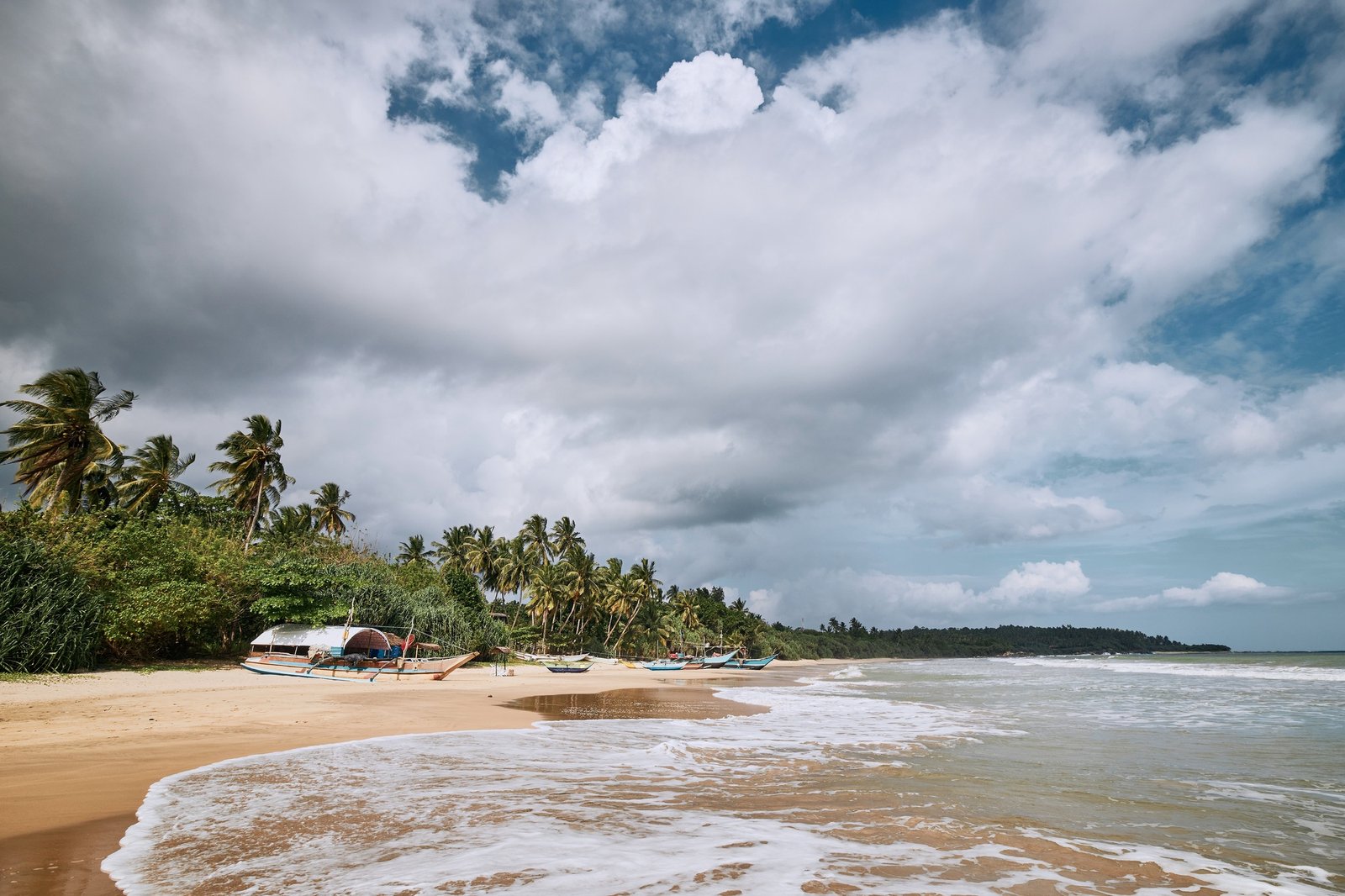
The coastal stretch between Chilaw and Puttalam represents Sri Lanka’s west coast in a more natural state, before tourism development transformed it into resort strips. This 60-kilometer section of coastline maintains its working character where fishing remains the primary economic activity, where villages face the sea rather than catering to visitors, and where the rhythm of life follows tides and catches rather than tourist seasons. The landscape alternates between sandy beaches, rocky shores, lagoons, and coconut plantations that extend nearly to the water’s edge.
What sets this coast apart is precisely what it lacks – the hotels, restaurants, and tourist infrastructure that define more developed beach areas. This absence creates opportunities to see coastal Sri Lanka functioning on its own terms, where local culture hasn’t adapted to accommodate foreign visitors. The roads follow the coastline closely in many sections, making it ideal for cycling or slow exploration that allows appreciation of the subtle changes in landscape, village architecture, and local activities as you move between these two towns.
Where is Chilaw to Puttalam Coast
Chilaw sits approximately 80 kilometers north of Colombo on the western coast, marking the southern end of this coastal stretch. Puttalam lies about 60 kilometers further north, near where the west coast begins curving toward the northwestern peninsula. The A3 highway runs close to the coast for much of this distance, sometimes directly adjacent to the beach and other times a few hundred meters inland behind lagoons or coconut groves.
The geography features a flat coastal plain where the land barely rises above sea level. Numerous lagoons and tidal waterways cut through this lowland, creating a landscape where water appears constantly – the ocean on one side, lagoons and channels on the other. Coconut plantations dominate the vegetation, their orderly rows broken occasionally by small patches of scrub forest or agricultural fields growing rice and vegetables in areas where freshwater irrigation allows cultivation.
Small fishing villages dot the coastline at regular intervals, typically where lagoon outlets meet the ocean or where beaches provide good launching points for fishing boats. These villages developed based on marine access rather than road connectivity, so their orientation focuses seaward with houses facing beaches and lagoons. The highway passes through or near these villages but often forms a secondary feature to the water-oriented settlement patterns.
What Makes Chilaw to Puttalam Coast Special
The fishing culture remains vibrant and authentic along this coast. Traditional outrigger canoes still work the waters alongside more modern fiberglass boats, and you’ll see various fishing methods practiced – net fishing from beaches, line fishing from boats, and prawn harvesting in lagoon areas. The morning return of fishing fleets creates daily spectacles as boats come ashore and catches get sorted on beaches. This isn’t performance for tourists – it’s genuine economic activity that has sustained these communities for generations.
Lagoon systems create unique ecosystems where fresh and saltwater mix. The Chilaw Lagoon forms one of the largest on the west coast, supporting mangrove forests, fish populations, and bird life. The Puttalam Lagoon further north extends even larger, its shallow waters and marshy edges providing critical habitat for resident and migratory waterbirds. These lagoons function as economic resources for fishing communities while also serving important ecological roles in coastal systems.
The Catholic influence shows strongly in coastal villages, a legacy of Portuguese and Dutch colonial periods when European traders and administrators introduced Christianity. Elaborate church buildings appear in villages, often the largest and most decorated structures in communities of simple houses. Religious festivals and processions remain important social events that bring villages together, and roadside shrines dedicated to saints reflect the integration of Catholicism into daily life.
Salt production has historically been significant around Puttalam where shallow water bodies and hot dry conditions create ideal circumstances for solar evaporation. Traditional salt pans stretch across low-lying areas where seawater gets channeled into shallow pools and allowed to evaporate, leaving salt crystals that workers harvest by hand. The geometric patterns of salt pans and the stark white of harvested salt create distinctive landscapes different from typical coastal scenery.
The pace of life along this coast moves noticeably slower than in more developed areas. Villages lack the restaurants, shops, and activity centers that tourist areas develop. Instead, small provision stores serve local needs, modest eateries cater to workers rather than travelers, and entertainment consists of fishing, repairing nets, maintaining boats, and community socializing rather than organized activities. This slower rhythm allows visitors to experience coastal life without the constant stimulation that resort areas provide.
Best Time to Visit Chilaw to Puttalam Coast
The dry season from December through April provides the most pleasant weather for cycling or exploring this coast. During these months, rainfall decreases significantly, temperatures moderate slightly from hot season peaks, and the ocean remains relatively calm. January through March particularly offer reliable conditions with sunshine, comfortable temperatures for outdoor activity, and steady breezes that help with cycling exertion. The dry weather also means better road conditions on smaller village roads that might become muddy during wet periods.
May marks the transition to the southwest monsoon when weather patterns begin shifting. Early May can still offer good conditions before the monsoon fully establishes, though afternoon rain showers become more frequent. The landscape starts transforming as vegetation responds to increased moisture, turning various shades of green after months of dry season brown. This transition period sees fewer visitors while still providing reasonably good weather for most days.
The southwest monsoon runs from June through September, bringing regular rainfall to the west coast. While not ideal for extended outdoor activities, the monsoon has its appeal – the coast looks lush and refreshed, fishing activities continue with adaptations to weather, and the dramatically reduced tourist presence means experiencing the area in its most authentic state. Morning hours often remain dry even during monsoon months, with rain typically arriving in afternoon or evening.
October and November represent the inter-monsoon period when weather becomes variable. Some days bring beautiful conditions while others see rain. This unpredictability keeps visitor numbers low, creating opportunities for peaceful exploration if you accept the weather uncertainty. Fishing communities work regardless of season, so village life continues with its regular patterns even if conditions aren’t always optimal for casual visitors.
Early morning hours from about 6 AM to 10 AM offer the best conditions year-round. Temperatures stay comfortable, fishing boats return with catches during these hours, and the light quality suits photography. Coastal breezes remain gentle in morning before increasing later in the day. Late afternoon from about 4 PM until sunset provides similar advantages with the added benefit of dramatic evening light painting the water and sky in warm colors.
Things to See in Chilaw to Puttalam Coast
The Munneswaram Temple near Chilaw represents one of the oldest Hindu sites in Sri Lanka, with origins tracing back over a thousand years. The temple complex includes shrines to multiple deities and demonstrates South Indian Tamil architectural styles. While primarily serving the local Tamil community, the temple attracts devotees from across Sri Lanka, particularly during the annual festival period. The religious significance and architectural details make it worth visiting even for those not practicing Hinduism.
Chilaw Lagoon stretches inland from the coast, its brackish waters supporting diverse marine life. The lagoon edges show typical mangrove vegetation, and fishing activity concentrates in certain areas where prawns and fish populations gather. The lagoon provides important nursery habitat for juvenile fish that later move to open ocean, making it ecologically significant beyond its role in local fishing economies. Boat access allows exploration of quieter lagoon areas away from fishing zones.
Fishing villages present varied characters as you move along the coast. Some specialize in particular fishing methods, others serve as market centers where catches from multiple villages get sold, and certain villages have developed modest boat-building industries. The architectural styles shift subtly – some villages show more Portuguese influence in house designs, others reflect more recent construction. Each village maintains its own identity despite the similar economic base of marine resource exploitation.
St. Anne’s Church in Thalawila, near Chilaw, stands as one of the most important Catholic pilgrimage sites in Sri Lanka. The annual feast in July attracts thousands of devotees who participate in processions and rituals. The church architecture blends European Catholic traditions with local building techniques and decorative elements. Even outside festival periods, the church sees steady visitor flow from Catholic communities seeking blessings or fulfilling vows.
Coconut plantations create distinctive landscapes along the coast, their orderly rows of palms extending in regular patterns. These plantations represent significant agricultural investments and continue producing copra and coconuts for both local use and export markets. Walking through coconut estates shows the maintenance work required – clearing undergrowth, harvesting nuts, managing irrigation where available. The shade beneath coconut palms provides relief from sun, and the rustling of palm fronds creates constant gentle sound.
Salt pans near Puttalam show traditional production methods still practiced. The geometric divisions of evaporation ponds, the channels directing water flow, and the harvesting techniques using simple hand tools demonstrate knowledge refined over generations. The salt production cycle follows seasonal patterns tied to rainfall and evaporation rates. Visiting active salt pans reveals labor-intensive work that produces this essential commodity using minimal technology.
Things to Experience in Chilaw to Puttalam Coast
Cycling the coastal road offers intimate engagement with the landscape and communities. The relatively flat terrain makes cycling accessible to moderate fitness levels, and the ability to stop easily allows spontaneous exploration of interesting features. The pace of bicycle travel suits the scale of this coast – slow enough to notice details, fast enough to cover significant distance and see landscape variations. Wind becomes a factor, sometimes assisting and sometimes challenging, adding variability to the physical experience.
Observing fishing boat launches and returns provides insight into maritime livelihoods. The teamwork required to launch boats through surf, the practiced movements of crews working nets, the rapid sorting of catches on beaches – these activities demonstrate skills and knowledge that fishing communities develop through experience. The social aspects become visible too – the conversations between crews, the way catches get divided, the relationships between boat owners and workers. Respectful observation reveals community dynamics and traditional practices.
Lagoon boat journeys show different perspectives on coastal ecosystems. Moving through calm lagoon waters allows close approach to mangroves and wading birds. The quiet of lagoons contrasts with ocean wave sounds, creating peaceful conditions for observation. Fishing activity in lagoons uses different techniques than ocean fishing, and watching how fishermen work these calmer waters demonstrates adaptation to specific environmental conditions.
Village interactions, when approached respectfully, offer cultural exchange opportunities. Small shops where you might stop for water or snacks become conversation points. Watching fish being cleaned and prepared shows techniques and species knowledge. Children playing on beaches or in villages provide moments of connection that transcend language barriers. These interactions work best when you’re genuinely interested rather than treating people as photo subjects or cultural specimens.
Sunset viewing from various points along the coast reveals how geography affects evening light. Open beach areas provide expansive sky views with the sun setting into the ocean. Lagoon areas offer reflections and silhouettes of fishing boats. Village settings frame sunsets with human elements – boats, houses, coconut palms. Each location creates different photographic opportunities and atmospheric qualities as day transitions to night.
Why Visit Chilaw to Puttalam Coast with a Local Guide
Route planning for cycling or driving requires knowledge of which roads offer the best coastal access and scenic value. The main A3 highway provides the most direct route but sometimes runs inland. Smaller roads that branch toward villages often provide better coastal views and more interesting stops. Guides familiar with the area know which diversions reward the extra distance and which dead-end unproductively. They also understand road conditions, particularly important on smaller tracks that might be rough or confusing to navigate.
Cultural sensitivity becomes important when entering fishing villages and observing daily activities. Understanding when you’re welcome to watch fishing operations versus when your presence interferes, knowing how to behave around religious sites and festivals, recognizing which activities people prefer not to have photographed – these considerations require familiarity with local customs. Guides provide this cultural bridge, making interactions positive for both visitors and communities.
Language facilitates deeper engagement with local people. While some English exists in larger towns, many fishing villages operate primarily in Sinhala or Tamil. Guides can translate conversations, explain what activities you’re observing, ask permission for photographs, and help with any purchases from local shops or eateries. This linguistic assistance transforms visits from surface observation to meaningful exchange.
Timing activities to coincide with fishing boat returns, market operations, or religious festivals requires advance knowledge and planning. Guides understand the schedules that govern coastal life – when boats typically come in, which days see larger markets, when festivals occur that might be interesting to witness. This timing knowledge maximizes what you experience during limited visiting time rather than arriving when nothing particularly interesting is happening.
Safety considerations include understanding ocean conditions for any beach access, knowing which roads handle bicycle traffic better, recognizing where to stop safely along highways with vehicle traffic, and avoiding areas where your presence might not be welcome. Guides provide this safety awareness while allowing you to explore freely within appropriate boundaries.
The historical and economic context enriches what might otherwise register as simply poor fishing villages. Guides can explain the Portuguese and Dutch colonial influence still visible in architecture and religion, discuss how fishing economics affect community life, describe the challenges these villages face from declining fish stocks and climate change, and share stories that humanize the people whose livelihoods depend on the sea. This contextual understanding creates empathy and appreciation for resilient communities maintaining traditional ways of life.
Identifying good eating options in areas without developed tourist infrastructure requires local knowledge. Guides know which modest restaurants serve good food, what dishes to try, how to communicate orders when menus aren’t in English, and which street food vendors maintain proper hygiene. This guidance allows you to experience authentic coastal cuisine without excessive worry about food safety or navigating unfamiliar ordering systems.